
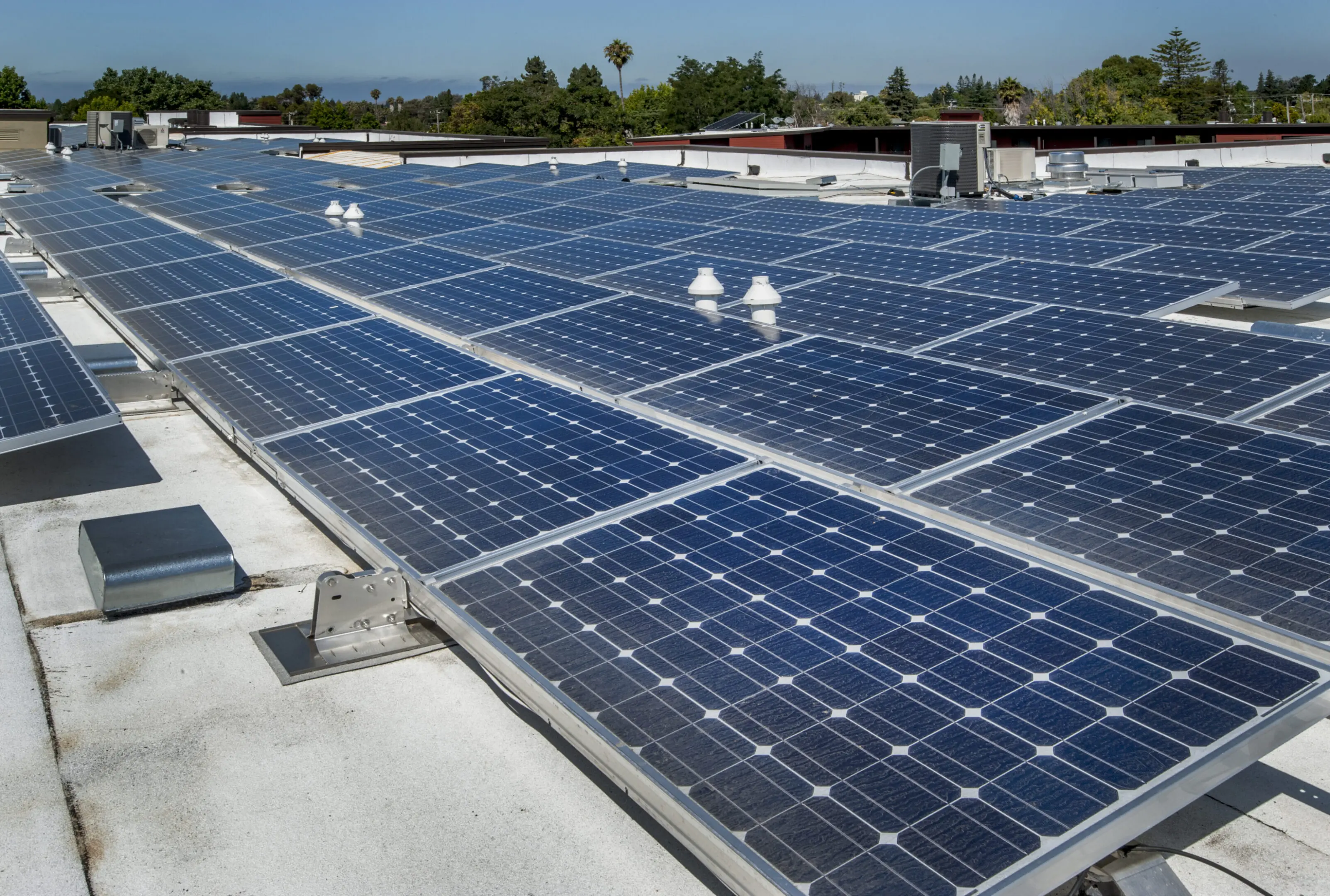
A properly sized solar system can provide faster payback and stronger financial performance than an oversized installation. Discover how matching your system to your actual energy needs helps maximize long-term savings and reduce upfront investment.
It sounds backward. More panels make more electricity, and electricity is the thing you are trying to stop buying. So why would a smaller system ever be the better investment?
Because return on investment is a ratio, and the panels you add last do not earn what the panels you added first did.
The First Panels Are Worth More Than the Last
Start with a small array on a building that runs during the day. Every kilowatt-hour it produces gets consumed immediately by the refrigeration, the air conditioning, the lighting, the equipment. Each one directly replaces a kilowatt-hour you would have bought at full retail price.
Now keep adding capacity. At some point — and it arrives sooner than most people expect — the array is producing more at midday than the building can use. That surplus does not vanish. It flows to the grid, where under California’s Net Billing Tariff it earns avoided-cost value rather than retail credit.
Those later panels cost the same as the first ones. They produce just as much electricity. They are simply worth considerably less, because of where the electricity goes.
The Second Ceiling: What You Can Actually Claim
There is a second limit, and it is the one businesses discover late.
The federal Investment Tax Credit and 100% bonus depreciation are claimed against tax liability. Their value is bounded by how much liability your business has. A company that can fully absorb the incentives on a modest system may only partially absorb them on a system twice the size.
The larger system costs twice as much. It does not deliver twice the benefit. The gap comes straight out of your return.
Tax treatment depends on your circumstances. Consult your tax professional.
What This Looks Like in Practice
In many cases a properly optimized 50 kW system can outperform a poorly matched 75 kW system. Not in raw kilowatt-hours — the larger array wins that comparison every time — but in payback period, in return per dollar invested, and in capital left available for the rest of your business.
The smaller system also carries less of everything else: less structural loading, less roof penetration, a smaller interconnection, less likelihood of triggering a utility service upgrade, and fewer components to maintain over twenty-five years.
Smaller Now Does Not Mean Smaller Forever
You do not have to install your entire long-term vision today. Many customers begin with a system that fits their current budget and expand later as the business grows or as storage becomes economically attractive.
A well-designed first phase anticipates that — the electrical service, the interconnection and the equipment selection chosen so the next step is an addition rather than a teardown.
The Question to Ask
When you receive a proposal, ask what portion of the annual production the model assumes your building will consume on site.
A contractor who sized to your load will have that number ready. A contractor who sized to your roof will not.
Request a free consultation and we will find the size that fits your building.