Most solar proposals you receive will specify microinverters or power optimizers — electronics mounted beneath every module. Ours generally do not. Here is the reasoning, which comes from service calls rather than from spec sheets.
Two Architectures
Every solar array has to convert direct current from the panels into alternating current the building can use. There are two common ways to arrange it.
Module-level electronics put a small device under each panel — a microinverter doing the conversion there, or an optimizer conditioning the output before it reaches a central inverter. Each panel is managed individually.
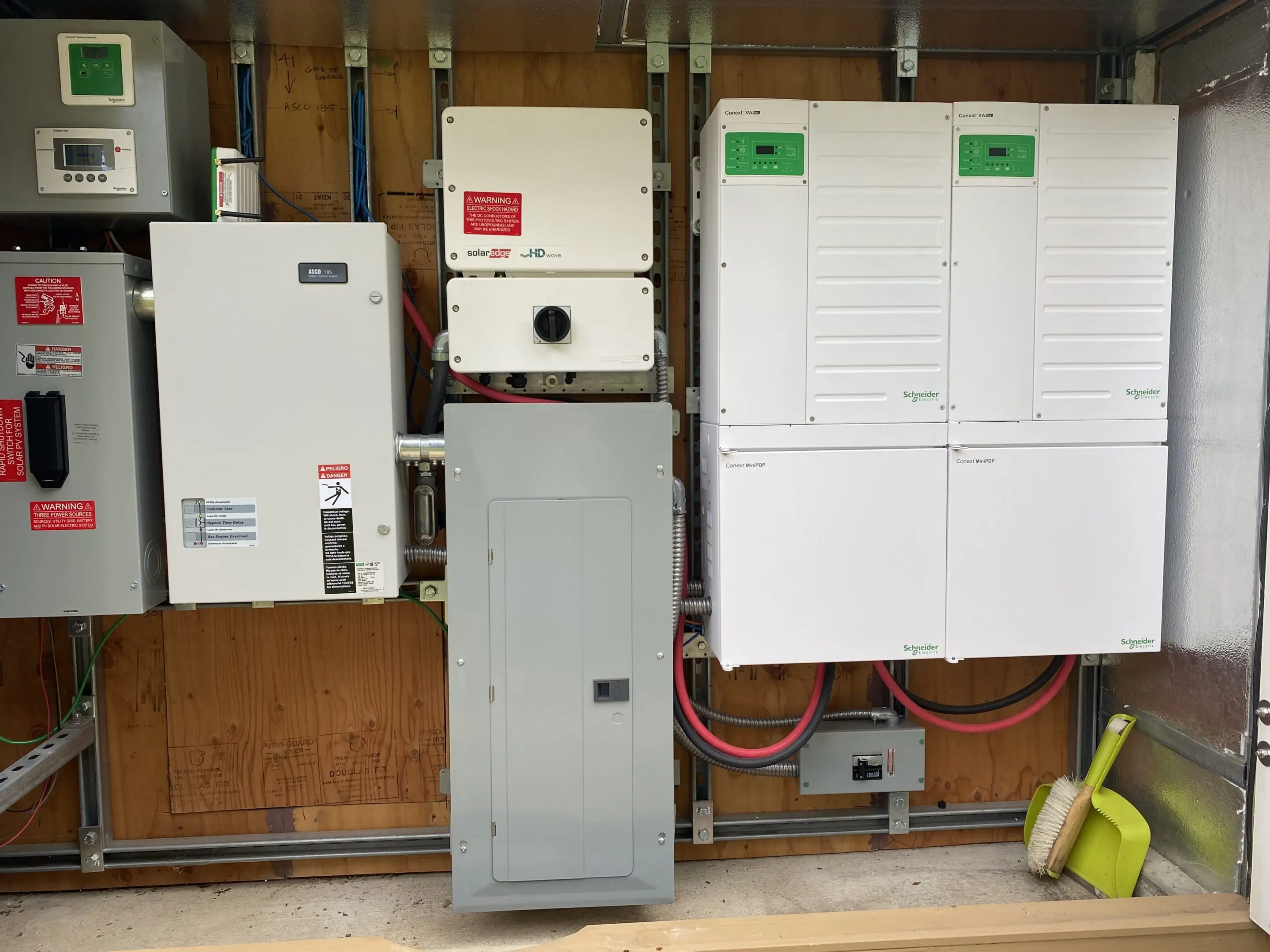
String inverters wire panels together in series and convert at one or a few central units, typically mounted at ground level or in an accessible equipment area.
Both work. The trade is between per-panel optimization and the number of components exposed to the weather.
What We See in the Field
After many years of installing and servicing these systems, a pattern has been consistent enough to shape how we design: a large share of the service calls we handle involve failures of module-level power electronics — the optimizers and microinverters themselves.
That is not a knock on any particular manufacturer. It follows from arithmetic and physics. A hundred-panel array with module-level electronics has a hundred power-conversion devices, each mounted on a hot roof, each cycling through daily thermal swings for decades. The same array on string inverters has one or two, in an accessible location, easier to keep cool.
More devices in harsher conditions means more failures over twenty-five years. And a failure under a panel means getting back on the roof, locating the unit, and replacing it — rather than servicing equipment you can walk up to.
But You Still Need Visibility
The strongest argument for module-level electronics used to be monitoring: without a device under each panel, you could not tell which one was underperforming.
That gap has largely closed. Modern string inverters carry sophisticated monitoring, and every system we install includes online performance monitoring so you can verify production and identify potential issues. Most also generate automatic notifications if performance falls outside expected operating parameters.
In many cases equipment manufacturers provide remote diagnostic services that can identify developing issues before they become significant. We prefer manufacturers who do exactly that — embedded remote monitoring that keeps both you and us informed, and supports the warranty.
Today it is entirely possible to identify performance changes and get useful diagnostic information without placing electronics beneath every module.
When We Specify Module-Level Electronics Anyway
We are describing a default, not a rule. Module-level electronics earn their place when a site calls for them — most commonly:
- Unavoidable partial shading that affects some panels and not others
- Multiple roof planes at differing orientations or pitches
- Irregular layouts where panels cannot be grouped into well-matched strings
- Rapid shutdown requirements that a particular design resolves most cleanly that way
Where they provide a clear engineering advantage for a project, we use them. Where they do not, we favor simpler architectures that reduce long-term maintenance while still providing excellent system visibility.
The Broader Point
A solar array is a twenty-five year asset, and most of those years happen after the contractor has been paid. Component count matters over that horizon in a way it does not on the day of commissioning.
When we recommend equipment, it is based on practical field experience — not marketing hype. That applies to inverter architecture the same way it applies to extended warranties and to whether your project needs a battery.
Request a free consultation and we will walk through what we would specify for your site and why.